Storage has become one of the least predictable line items in infrastructure budgets.
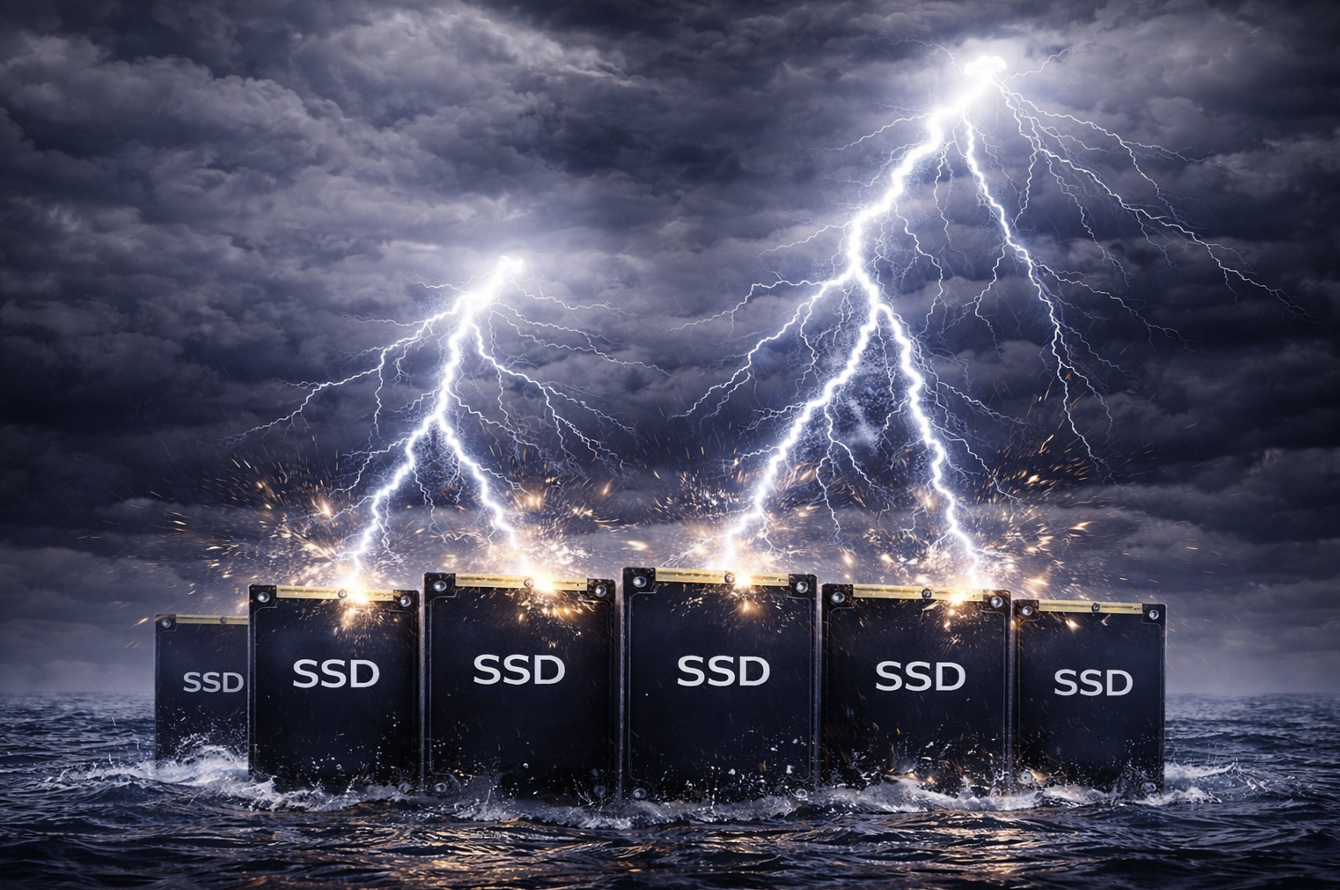
AI-driven demand has led to memory supply constraints and rising prices which in turn are changing datacenter economics. The cost and delivery differentials are massive, which means organizations must re-evaluate how storage is designed and deployed.
The impact is easy to see in SSD pricing. A single 30TB SSD that sold for roughly $3,000 in Q3 2025 is now worth north of $10,000 and still climbing. Multiply that across petabytes, and the economics become difficult to justify.
Analysts aren’t suggesting this is a short-term blip. Goldman Sachs recently warned of the “potential for conventional DRAM prices to rise by double-digit percentages quarter-over-quarter throughout every quarter of 2026” due to persistent supply-demand imbalances.
In this environment, storage architecture matters more than ever.
Why “All-Flash Everything” No Longer Makes Sense
When flash was inexpensive and abundant, the default answer was simple: put everything on SSD.
But many environments don’t require 100% of their data to live on flash 100% of the time. They often have a smaller “hot” data set that drives performance, paired with a much larger body of data that benefits from capacity, durability, and cost efficiency, not raw IOPS or bandwidth.
The question isn’t whether flash is valuable. It absolutely is.
The question is whether you need all of it.
Many organizations are surprised to learn that they can achieve the same application-level performance without putting 100% of their capacity on SSDs. The architecture changes, while throughput and responsiveness remain intact.
A Broader Set of Options Built Around Your Workload
This is where thoughtful design comes in.
Modern storage strategies can combine performance media with high-capacity tiers to deliver application-level performance without all-flash economics. When properly architected, users experience speed, while the infrastructure delivers balance.
Hybrid approaches are one example. Tiered “All Flash + Capacity” models show how flash can be sized for performance instead of capacity, delivering strong throughput and high capacity while significantly lowering cost, power, and rack footprint compared to all-flash designs.
But hybrid isn’t the only path.
Thinkmate storage engineers design solutions across a broad spectrum, including:
In some environments, 10–20% flash is right. In others, 40% is the right choice.
And in certain cases, 100% flash can be justified even at the high costs the industry is experiencing now.
The point is not to default to a configuration. It’s to align architecture with workload behavior.
Future-Ready Storage Design
In AI environments, workloads shift. Locking into a single storage model too early can be expensive to modify. When you work with Thinkmate, you gain a flexible, cost-effective architecture designed around your requirements rather than a fixed configuration.
The Thinkmate approach allows you to:
Work With a Team That Gives You Options
Storage decisions should start with your workload and growth plans, not a specific platform. Thinkmate helps you evaluate usage patterns, scale requirements, and performance targets, then advises on the right mix of NAS, Ceph, hybrid, or all-flash for your environment.
Explore Thinkmate storage options and talk to a storage expert about your storage strategy.