Talk to a Thinkmate Storage Engineer to design the optimal solution to meet your budget, timeframe, performance, and growth requirements.
From file, block, and object storage to AI and HPC workloads, Thinkmate designs the best the industry has to offer, including NAS, Ceph, hybrid, JBOD, and all-flash solutions.
The significant increase in flash memory prices and global supply constraints have made storage decisions a lot more visible and impactful than before.
Storage architecture has become a strategic decision. Performance targets, data growth, and operational constraints all influence how storage should be built and deployed.
Storage decisions should reflect business objectives, not product offerings.
At Thinkmate, we start with your workload and business objectives. Our engineers assess your performance requirements, data patterns, resiliency needs, growth expectations, budget, timeframes, optimization possibilities, existing infrastructure, and ongoing evolution and support needs. We then work with you to co-design the right solution. Whether you need direct-attached JBOD, scalable Ceph, all-flash arrays, or hybrid storage, we tailor node configurations, cluster sizing, and durability levels to meet your specific use case.
Given the massive increase in memory, and therefore SSD prices, customers often ask: “How much flash do I really need?” Thinkmate engineers can help answer that armed with hands-on experience, workload-based sizing, and pre-validated configurations that meet performance and system delivery goals without overspending. Systems arrive ready for rack-and-stack deployment, with management tooling and network design guidance to help you move into production quickly.
Vendors often promote what they can provide. Thinkmate evaluates the broader market and partners with best-in-class technology providers to deliver the right solution for your environment. This approach provides visibility into emerging technologies and access to the strongest options across the industry.
The result is an objective, engineering-led approach to storage architecture. Designs are built around your performance requirements, resiliency targets, and long-term growth plans, with the full range of technologies considered. Thinkmate storage solutions are tailored to deliver the right balance of performance, durability, and scalability.
Built and stress tested in state-of-the-art manufacturing facilities located in the US and Europe, with assembly and test sites around the world.
Award-Winning warranty with advanced parts replacement.
Talk to people, not robots. Work with experienced engineers who help you size, configure, and design systems based on your specific workload, budget, and growth plans.
We have decades-rich, integrated relationships with global technology and component leaders, our pricing is on par or better than the best the industry can provide, and every system we build is 100% customized for your needs.
Network Attached Storage
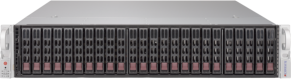
The DataFlow NAS Storage lineup delivers flexible, scalable solutions for businesses of all sizes, with three tiers—Value, Pro, and Elite—designed to balance capacity, performance, and support. Backed by ZFS expertise and engineering-driven service, DataFlow NAS ensures your storage can grow with your needs.
High-Performance Ceph Storage
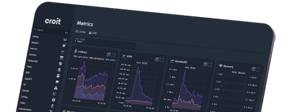
DataFlow CPH is a turnkey Ceph storage platform that delivers open-source power without the complexity or high cost. It combines optimized Thinkmate hardware with Croit’s management and support for simple deployment and scalable growth.
High-End AI/HPC Storage
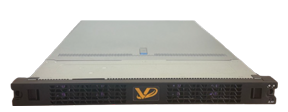
DataFlow HPS with VDURA delivers extreme endurance and performance through a scalable parallel file system built for sustained velocity and durability at scale. It supports both all-flash and hybrid configurations.
Solutions for Nearline Storage
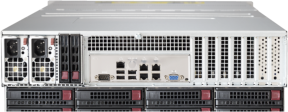
High capacity storage for a multi-drive server system requires predictable and reliable performance. STX NL servers are built to support enterprise-class nearline workloads. These Storage Servers offer HDD capacities of up 8TB and are available in your choice of SATA or SAS interfaces. STX NL provides excellent IOPS/TB along with the reliability, availability, and serviceability that you expect from us.
Enclosures & Servers for RAID or JBOD Expansion
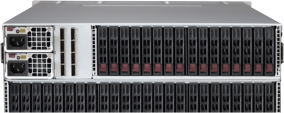
JBOD Storage Expansion units provide a dependable, high-capacity, storage expansion option. Our JBODs are perfect for consolidating archives and backups from a central storage server or increasing storage capacity on an existing system. Using JBODs for storage expansion is often the most economical method to expand your current storage capacity.
Unsure what to get? Have technical questions? Contact us and we'll help you design a custom system which will meet your needs.
Thinkmate offers discounts to academic institutions and students on purchases of Thinkmate Systems. Contact us for details.
We offer rapid GSA scheduling for custom configurations. If you have a specific hardware requirement, we can have your configuration posted on the GSA Schedule within 2-4 weeks.




 Call 1-800-371-1212
  E-mail us